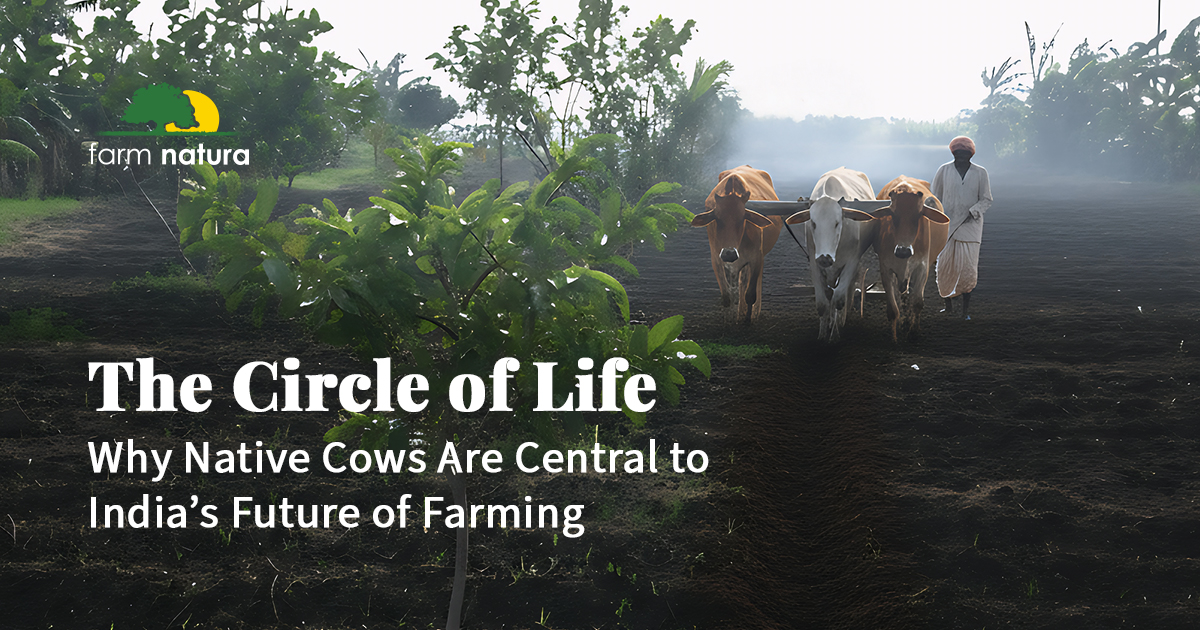
What Is the Importance of Indian Cows in Natural Farming?
Long before laboratories, India's fields had their scientists.
They grazed, chewed, digested, and gave back to the soil what they took from it.
Our Indian cows evolved alongside native crops and microbes, forming a partnership perfected by time. Their dung and urine were never waste, they were microbial reservoirs, carrying life-giving bacteria and enzymes that awakened the soil's dormant intelligence.
Each native cow at Farm Natura is part of this living network turning grass into fertility, heat into energy, and stillness into renewal. This is the foundation of Cow Based Natural Farming, not a belief system, but an ecological design tested and proven for centuries.
How Does Cow-Based Farming Improve Soil Fertility?
Inside a handful of cow dung live more than 3 trillion microorganisms - nitrogen fixers, decomposers, and fungal allies that transform waste into growth.
When mixed through Jeevamrutham or Neemastram, they create liquid life that seeps into the soil, restoring what chemicals stripped away.
- Cow dung feeds the microbes.
- Cow urine disinfects and balances pH.
- Neem, garlic, and green leaves become natural pest repellents.
And when applied across our fields, these formulations regenerate what synthetic fertilisers destroy.
Every batch at Farm Natura is prepared by hand, fermented in earthen pots, stirred with care, and poured over the fields like a blessing. It's how the soil begins to remember and how fertility turns into faith again.
How Do Cows Help Maintain Ecological Balance on a Farm?
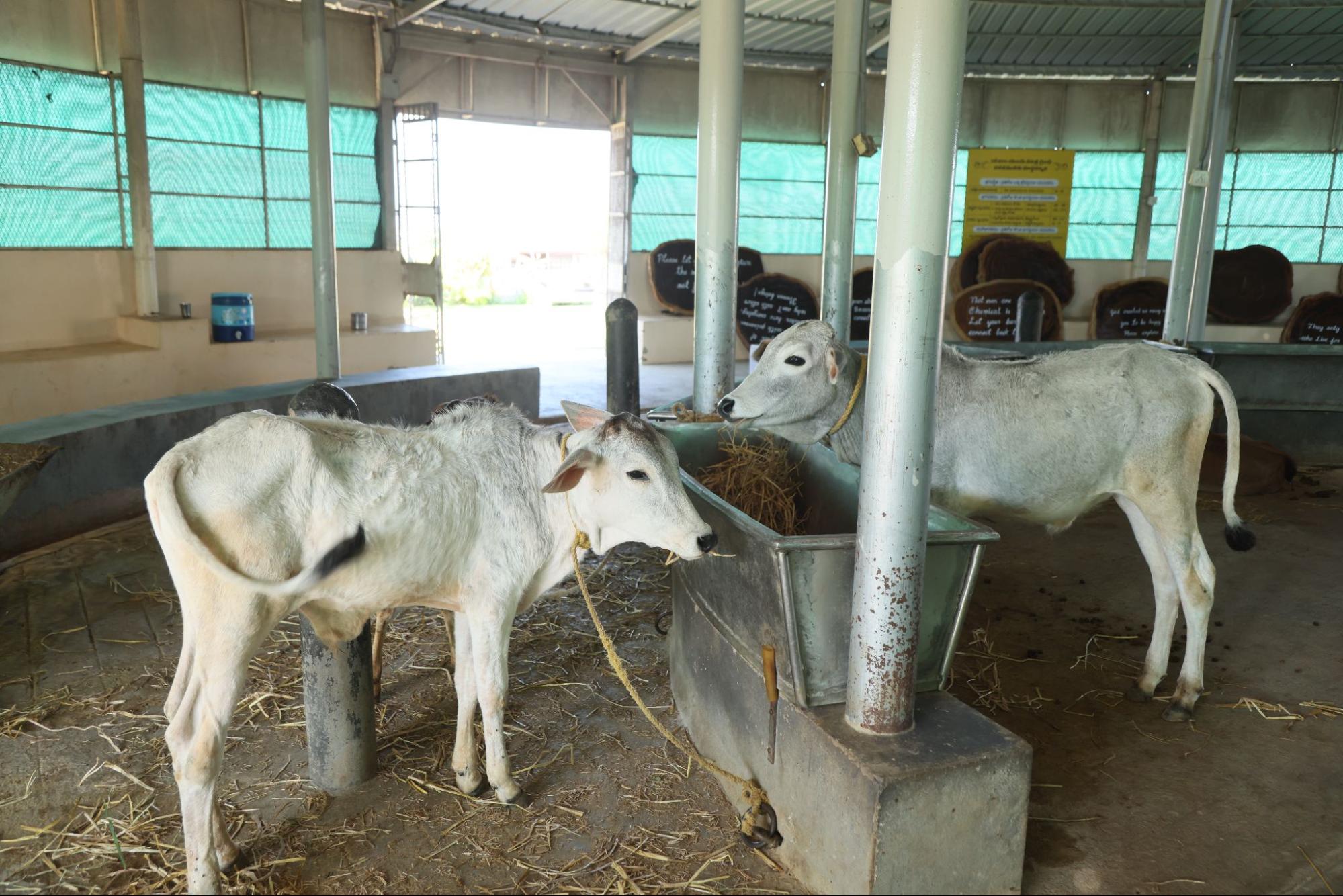
Step into the Farm Natura Gaushala, and you'll meet seventy gentle beings who sustain an entire ecosystem.
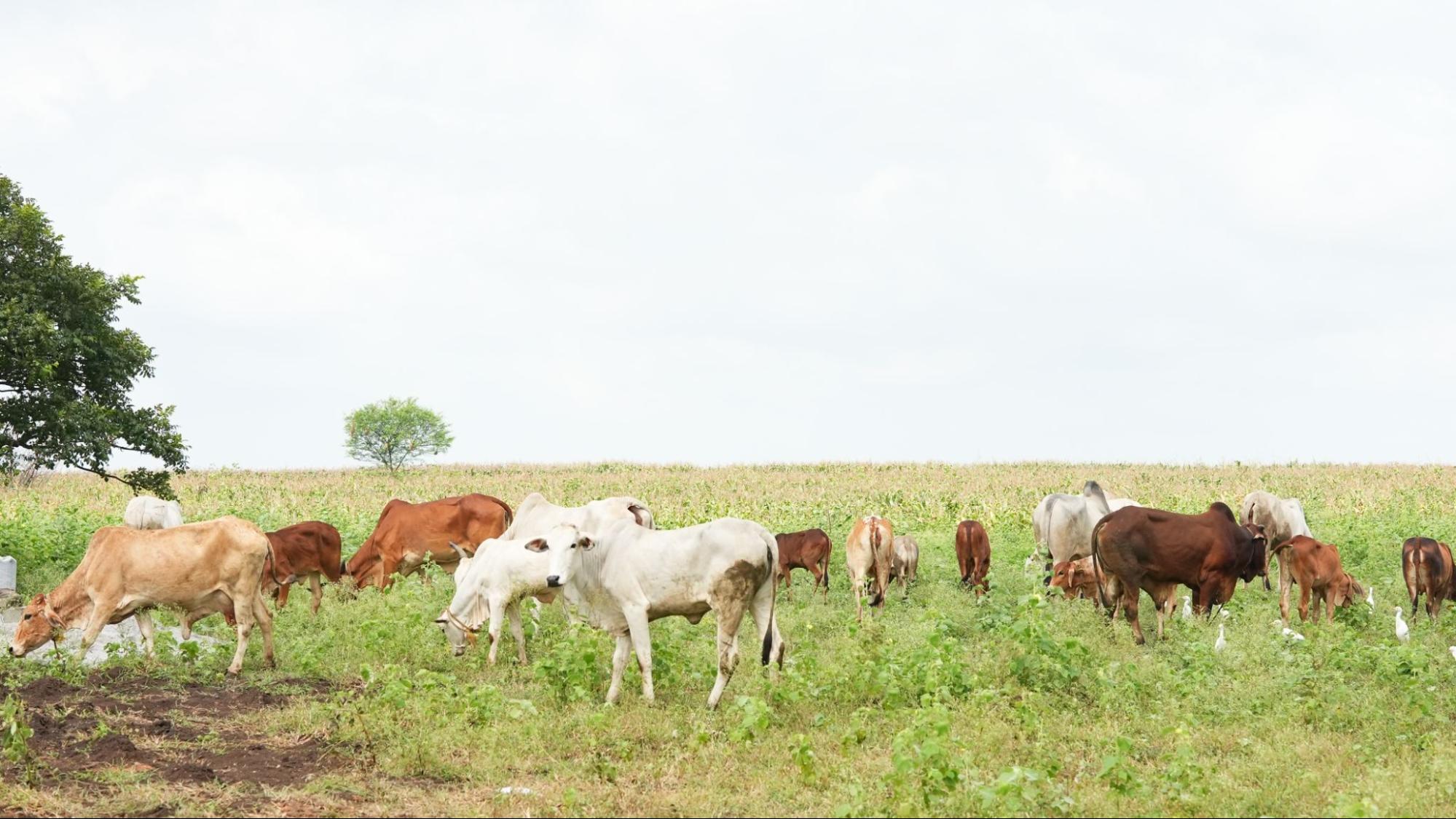
Our 70 + native cows are now thriving across our 110 acres of natural farmland.
Their presence does more than nourish. They give warmth in winter, shade for birds, dung for microbes, and calm for the land. The air around them hums with equilibrium - oxygen, ammonia, methane, and moisture cycling in perfect rhythm.
Each cow is a silent worker in the loop that binds soil, air, water, and sunlight.
When we say Farm Natura is alive, we mean it literally - its pulse beats through the hooves of these animals.
They are not resources; they are keepers of the circle of life.
How Are Cows, Soil, and Human Health Connected?
Everything in nature is a circle - cow to soil, soil to plant, plant to human, and human back to soil.
Healthy cows produce living fertilisers that feed the soil.
Healthy soil creates healthier families - food richer in enzymes, minerals, and vitality.
That food, in turn, nurtures our microbiome, the invisible gut life that mirrors the life beneath the Earth.
When we eat from living soil, we don't just fill our stomachs, we rebuild our immunity, mood, and balance. It's a nutrition loop where every life feeds another proving that health is not manufactured, it's cultivated.
At Farm Natura, this philosophy breathes through every seed sown, every cow tended, and every harvest shared.
Why Is Integrating Tradition and Technology Important for the Future of Farming in India?
The future of sustainable farming in India won't come from machines alone - it will come from remembering what we already knew.
From ancient science meeting modern insight.
At Farm Natura, we believe in integrating tradition and technology in farming where consistent soil reports measure health and cows measure harmony.
Our community of farmers, ecologists, and families forms a living laboratory proving that natural farming communities can feed the future without harming it.
Because when the past and the present work together, the land writes a future that heals.
📍 Visit Farm Natura to meet the silent partners that keep our soil alive.
Frequently Asked Questions
1. What is the importance of Indian cows in natural farming?
Indian cows enrich soil naturally. Their dung and urine serve as bio-fertilisers, improving microbial activity and structure without external inputs, the heart of cow based natural farming.
2. Why are indigenous cattle important?
Indigenous breeds are adapted to India's climate, resistant to local diseases, and perfectly suited to sustainable agriculture. They maintain ecological cycles through manure, milk, and energy recycling.
3. Why is the cow so important in India?
Beyond religion or symbolism, the cow has been a pillar of India's rural ecology - providing food, fuel, compost, and companionship. It's not worship; it's gratitude to the creature that sustains life itself.
4. What is the role of cattle in a farmer's life?
For farmers, cattle are collaborators. They till, fertilise, and nourish. They're part of the daily rhythm that makes agriculture cyclical, not extractive.